

An SSD enclosure does more than provide an exterior shell for a storage device. Its material, structure, machining accuracy, and surface finish can influence heat dissipation, protection during handling, assembly fit, and the overall appearance of the finished product.
For OEM projects, these requirements also need to remain consistent from prototype development through volume production. Aluminum die casting is commonly considered for SSD enclosure manufacturing because it can combine lightweight construction, heat-transfer capability, structural rigidity, and repeatable forming of relatively complex housing geometries. This guide explains the main manufacturing requirements and how an integrated production process can simplify SSD enclosure development.
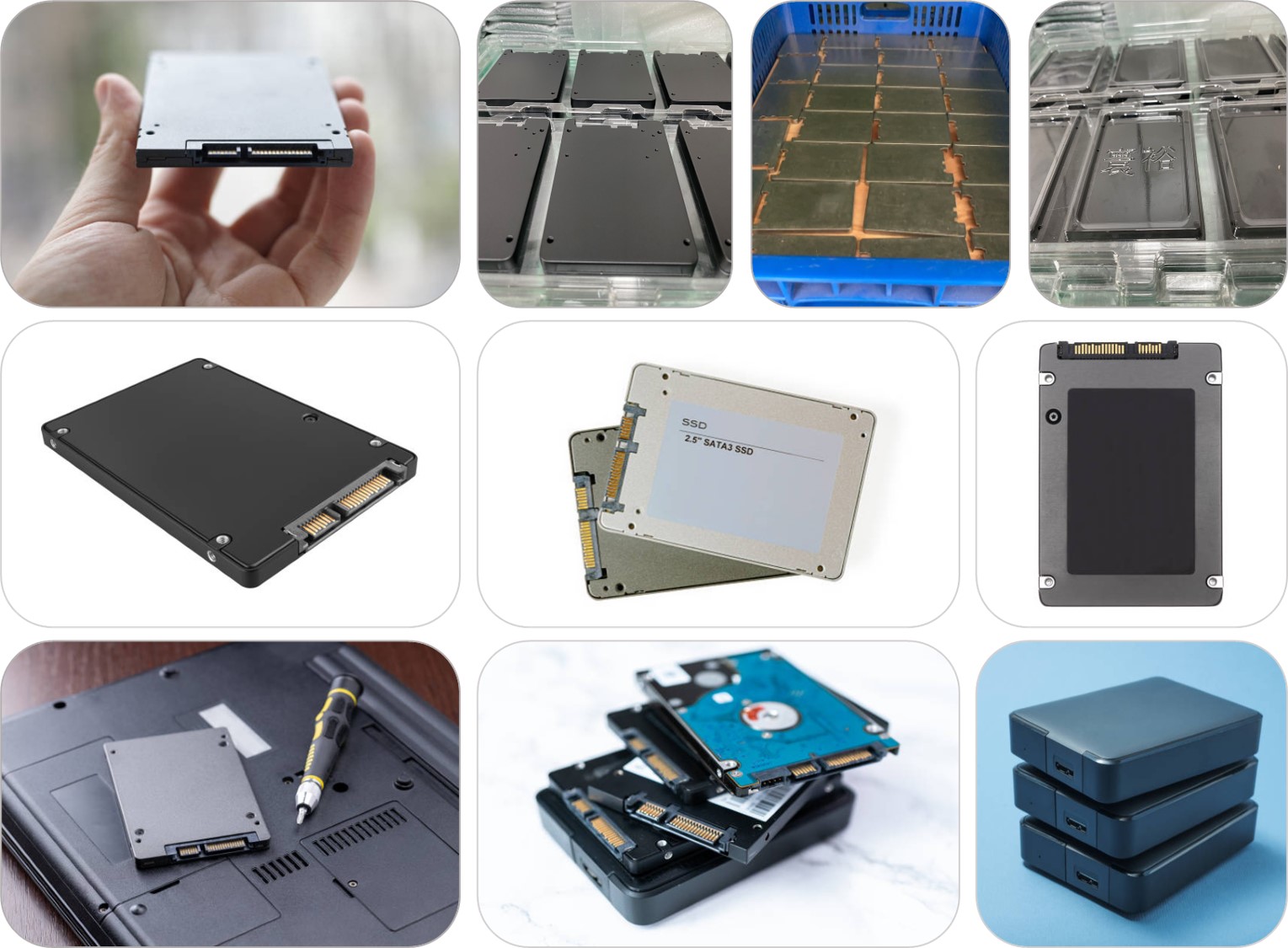
Although SSD enclosures vary in size, interface, appearance, and internal layout, most designs need to balance three practical requirements: thermal management, physical protection, and portability. These considerations influence material selection as well as the casting, machining, and finishing processes used later in production.
SSDs generate heat during operation, particularly when data is transferred continuously or the device is used under sustained workloads. If heat accumulates inside the enclosure, operating temperature can rise and may affect performance or component longevity.
The enclosure forms part of the thermal path between internal components and the surrounding environment. Aluminum alloys offer higher thermal conductivity than common engineering plastics, allowing heat to spread through the housing more efficiently. Effective heat transfer also requires proper contact between heat-generating components and the enclosure, often supported by thermal pads.
Heat dissipation is not determined by material alone. The internal layout, thermal pads, enclosure dimensions, airflow, surface area, and the specific aluminum alloy all influence actual thermal performance. For this reason, enclosure design and manufacturing should therefore be evaluated together to ensure that the finished housing meets the application's thermal requirements.
During carrying, handling, and transportation, external SSDs may be exposed to impacts, pressure, and other mechanical loads. The enclosure needs to provide sufficient structural support to protect the internal circuit board, connectors, and storage components from these stresses.
Aluminum provides a useful balance between rigidity and weight for this type of application. Die casting can also incorporate reinforcing ribs, mounting bosses, and screw fastening features directly into the housing geometry. These features allow structural support to be added selectively instead of increasing the thickness of the entire enclosure.
The appropriate wall thickness and reinforcement pattern depend on the product dimensions, connector layout, expected loads, and assembly design. Early manufacturability review can help avoid unnecessarily heavy structures while maintaining the required level of protection.
Portability is particularly important for external SSDs used with laptops, cameras, mobile workstations, and other portable devices. For OEM development, enclosure weight and dimensions must be carefully controlled while accommodating internal components and maintaining sufficient structural support.
Aluminum’s relatively low density makes it suitable for compact metal housings, and die casting allows thin-wall features and integrated geometry to be produced without machining the complete enclosure from solid stock.
The result can be a compact housing that balances structural requirements with product weight. However, reducing wall thickness too aggressively can introduce casting, deformation, or strength concerns, so lightweight design should be evaluated together with mold flow, alloy selection, and post-machining requirements.
Aluminum die casting uses pressure to inject molten alloy into a precision mold, allowing the main enclosure geometry to be formed in a relatively short cycle. Once the tooling and production parameters have been validated, the process can reproduce the same housing geometry across repeated production runs.
For an SSD enclosure, this is useful because the part often combines several features within a compact structure. External contours, thin walls, internal supports, screw bosses, heat-dissipation features, and branding surfaces may all need to coexist within the same component.
Die casting can produce near-net-shape geometry for SSD enclosures, although precision mating surfaces, holes, and other features requiring tight tolerances may still need secondary CNC machining. For OEM programs with sufficient production volume, this can improve unit-cost efficiency and support repeatable manufacturing.
It also allows the enclosure design to incorporate thermal and structural features from the beginning. For example, ribs or external fins can be included in the casting instead of being added as separate parts. The final design still needs to follow die-casting principles such as suitable draft angles, wall transitions, parting-line placement, and achievable wall thickness.
Buyers evaluating an aluminum die casting manufacturer should therefore look beyond machine capacity. Mold engineering, casting control, secondary machining, finishing, and inspection all influence whether the finished enclosure can consistently meet assembly and appearance requirements.
For an example of an aluminum housing developed for storage applications, please visit our SSD enclosure manufacturing page.
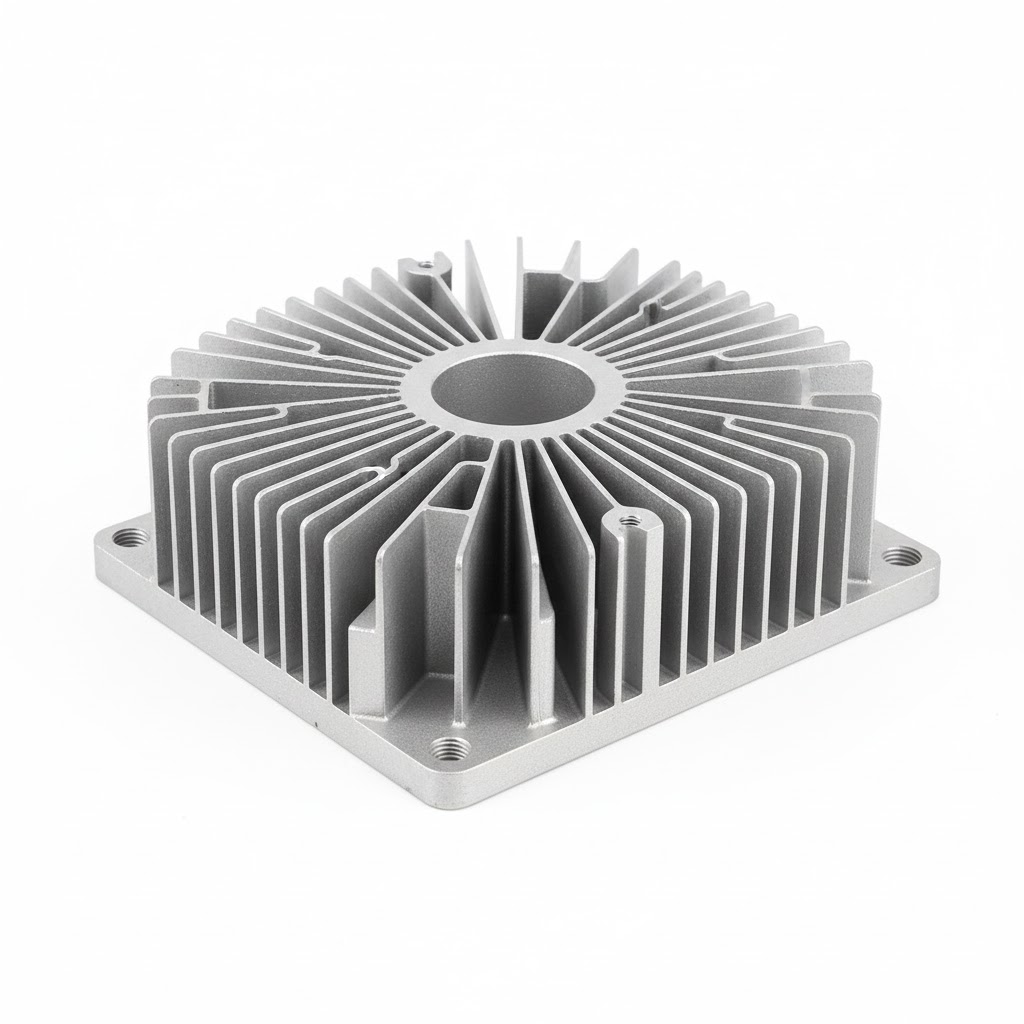
An SSD enclosure generally requires more than the initial casting operation. The housing must move through forming, precision machining, finishing, assembly, and inspection before it becomes a production-ready component. Coordinating these stages as one manufacturing sequence can help maintain clearer dimensional and quality requirements from the original design through final delivery.
The first stage creates the main aluminum enclosure structure. Molten alloy is injected into a steel mold to form the housing body and selected features such as ribs, bosses, mounting structures, or heat-dissipation contours.
The objective is to create a near-net-shape part that already contains most of the required geometry. Doing so reduces unnecessary material removal later and provides a consistent starting point for subsequent machining.
Mold design has a significant influence at this stage. Metal flow, wall thickness, gate position, venting, cooling, and ejection all affect casting stability and surface condition. For thin or compact electronic housings, these factors should be evaluated before tooling is finalized.
Die casting can establish the overall shape, but certain features usually require tighter tolerances than the casting process alone is intended to provide. CNC machining is therefore used to finish critical interfaces such as screw holes, connector openings, locating surfaces, mating edges, and other precision features.
This stage is particularly important when two housing halves must align accurately or when the enclosure interfaces with a PCB, connector, thermal pad, or internal mounting component.
A manufacturer that handles both casting and CNC processing can coordinate machining datums with the original casting design. This can help reduce tolerance conflicts between the two processes and make fixture planning more straightforward.
After machining, the enclosure may undergo surface treatment to improve appearance, wear resistance, corrosion protection, or tactile quality. Depending on the alloy and product requirements, options can include anodizing, blasting, powder coating, polishing, or other finishing processes.
For branded SSD products, the selected finish also affects the enclosure's appearance and consistency across production batches. Color, texture, gloss level, and surface uniformity all influence the visual impression of the finished device.
The appropriate finish should be selected early because not every die-casting alloy responds to every surface process in the same way. If decorative anodizing is required, for example, alloy selection and casting surface quality should be reviewed before mass production rather than treating finishing as an isolated final step.
Once casting, machining, and finishing are complete, the enclosure can move into final assembly and quality inspection. Depending on the OEM scope, this may include fitting enclosure components, installing fasteners or related hardware, and preparing completed housings for packaging.
Inspection should cover both dimensional and cosmetic requirements. Critical dimensions can be verified using equipment such as a coordinate measuring machine, while visual inspection can check surface condition, color consistency, scratches, coating defects, or other appearance requirements.
For an SSD enclosure, inspection should focus particularly on the interfaces that affect assembly: screw positions, connector openings, mating surfaces, enclosure dimensions, and internal clearances. Establishing these inspection points during development provides a clearer basis for controlling repeat production.
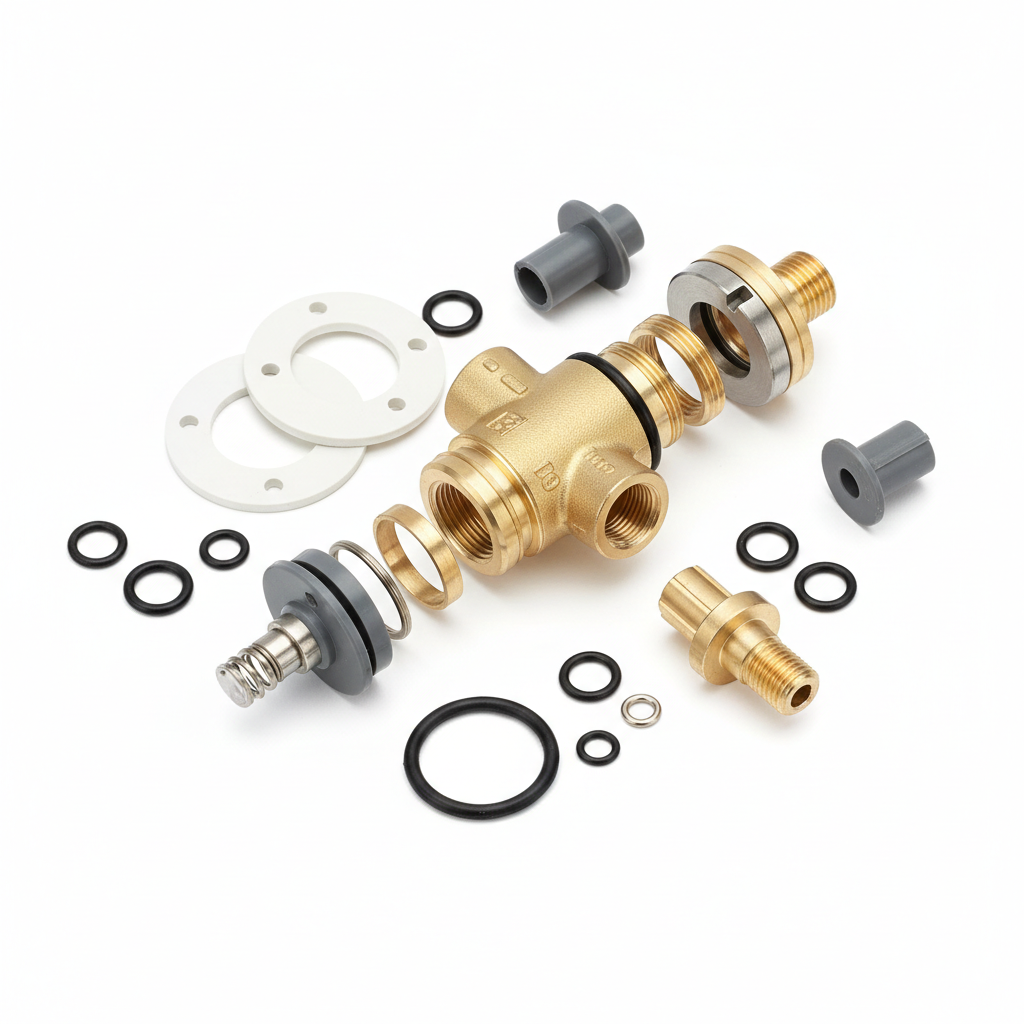
An SSD enclosure can involve several manufacturing disciplines, and managing each one through a separate supplier creates additional coordination. A brand may otherwise need to send the casting to one factory for CNC machining, another for surface treatment, and potentially another for inspection or assembly.
Working with an integrated manufacturer can simplify this supply chain. Drawing revisions and dimensional requirements can be communicated through one production team, while casting and machining engineers can resolve tolerance or fixture issues directly. Surface requirements can also be reviewed against the selected alloy and production process before parts reach the finishing stage.
This integration can be particularly useful during product development. Prototype feedback often leads to changes in connector openings, wall thickness, screw locations, surface finish, or internal geometry. When tooling, casting, machining, and inspection are coordinated within the same manufacturing framework, those changes can be evaluated across the complete process rather than separately by multiple suppliers.
A common quality-management structure can also make production issues easier to trace. If a dimension or surface characteristic falls outside specification, the manufacturer can review the relevant upstream process instead of requiring the buyer to determine which independent supplier caused the variation.
The main advantage is therefore not simply fewer purchase orders. A one-stop manufacturing approach can reduce handoffs, simplify technical communication, and provide clearer responsibility as an OEM enclosure moves from development into repeat production.
A successful SSD enclosure needs to balance thermal management, structural protection, portability, dimensional fit, and exterior appearance. Aluminum die casting provides a practical manufacturing route for many OEM designs because it can form lightweight, complex housings efficiently while leaving critical interfaces for subsequent precision machining.
At QANYU Industrial, we support OEM SSD enclosure projects through an integrated manufacturing process that includes aluminum alloy die casting, mold development, CNC machining, surface treatment, assembly, and inspection. Our inspection capabilities include CMM and other dimensional and material verification equipment, allowing enclosure requirements to be reviewed from initial forming through final quality control.
For brands developing custom aluminum SSD housings, we can review product geometry, production volume, finishing requirements, and assembly needs to determine an appropriate manufacturing approach. To discuss your OEM SSD enclosure project, contact us today.