

Choosing a casting method for aluminum parts starts with understanding how molten metal fills the mold. Because aluminum begins to cool and solidify as it flows, thin walls and intricate features generally require faster filling to ensure the metal reaches all areas of the cavity. Thicker, simpler geometries are typically less sensitive to filling speed, allowing greater flexibility in the casting process.
Among all the casting methods, two commonly compared methods are aluminum die casting and gravity casting. Both use molten aluminum and reusable molds, but they differ significantly in how the metal enters the mold, the equipment involved, production speed, and the types of parts they are best suited to produce.
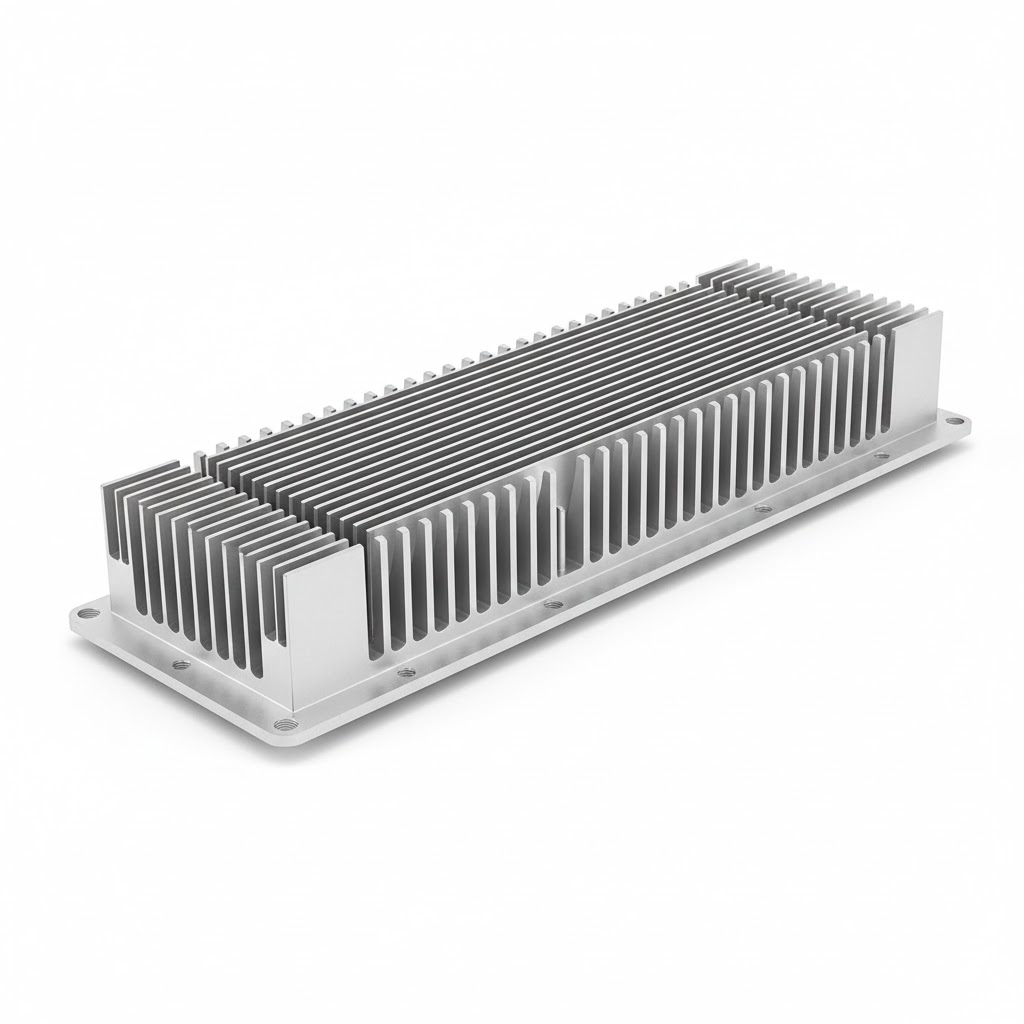
Aluminum die casting is a manufacturing process in which molten aluminum alloy is injected into a precision steel mold under high pressure. The pressure and injection speed allow the metal to fill relatively thin sections, detailed features, ribs, bosses, and other complex geometries before solidification.
Once the mold has been developed and the process parameters are established, the same geometry can be reproduced efficiently across repeated production cycles. This makes aluminum die casting particularly suitable for medium- to high-volume parts where dimensional consistency and production speed are important.
Another advantage is its near-net-shape capability. Features such as reinforcing ribs, external contours, and the basic shapes of mounting bosses can be formed directly during die casting. Where as-cast dimensions and surface quality meet design requirements, these features may not require additional machining. However, critical holes, threads, sealing surfaces, and tighter-tolerance interfaces may still require secondary CNC machining.
The process can also provide a relatively smooth surface compared with many slower casting methods, which may reduce the amount of preparation required before painting, coating, or other finishing operations. Surface quality still depends on mold condition, alloy, process control, and the intended finish.
Applications commonly include electronics housings, motor components, heat-dissipation parts, automotive brackets, appliance components, and other products with complex geometry or relatively thin walls.
For a closer look at the process and available capabilities, please visit our aluminum alloy die casting service at QANYU Industrial.
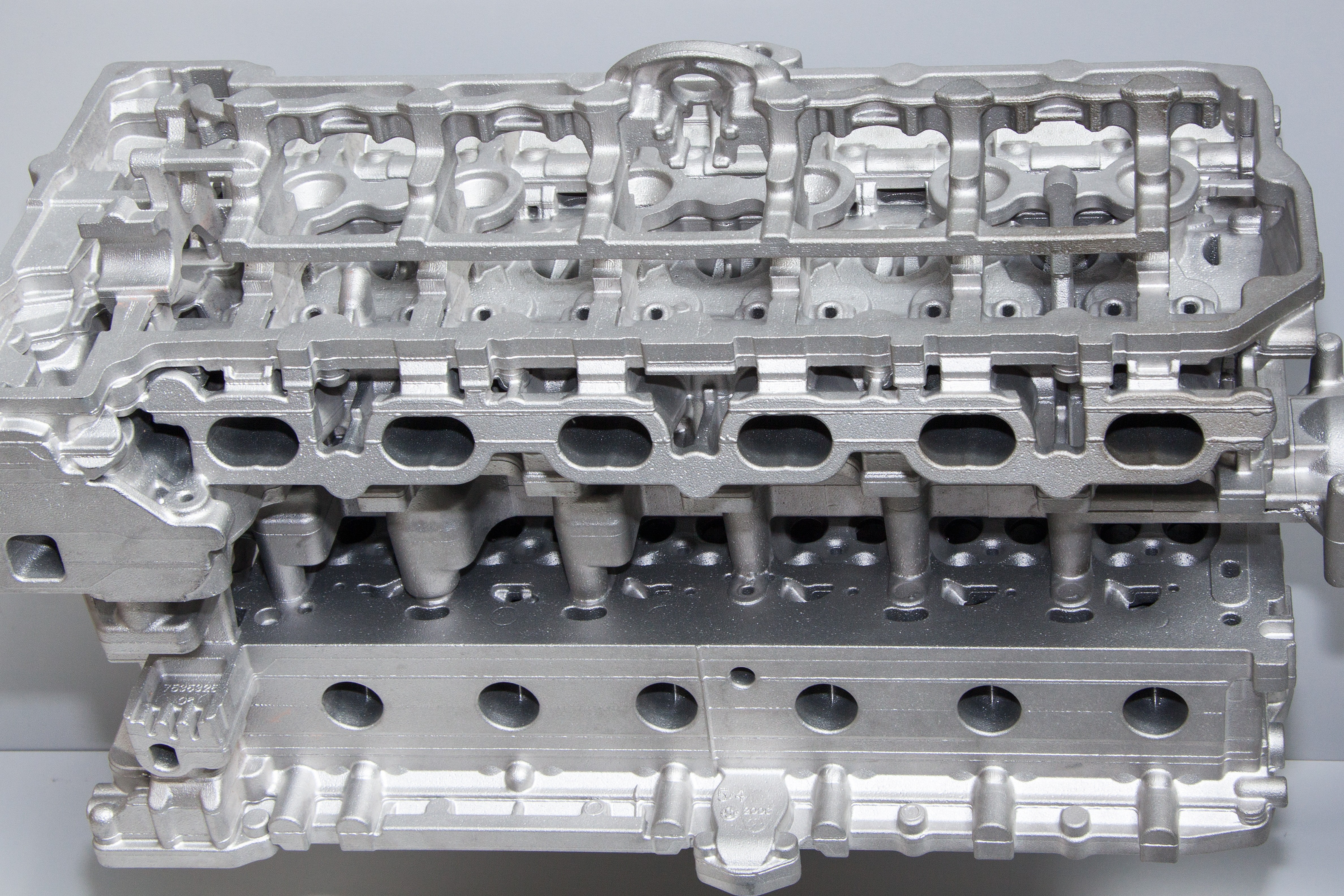
Gravity casting relies on gravity rather than high injection pressure to fill the mold. In this comparison, the term generally refers to gravity die casting, also known as permanent-mold casting, where molten aluminum is poured into a reusable metal mold and allowed to flow naturally into the cavity.
Because gravity casting generally involves lower filling velocities than high-pressure die casting, it is often better suited to thicker sections and less intricate geometries. However, its ability to form thin walls, fine details, or long, narrow flow paths also depends on alloy fluidity, mold temperature, gating design, and part geometry. Depending on these conditions, adjustments to the gating layout, mold preheating, or local wall thickness may help improve filling consistency.
The lower filling velocity may also reduce gas entrapment caused by turbulent mold filling associated with turbulent high-speed injection. However, this does not mean gravity-cast parts are necessarily free of porosity or mechanically stronger than high-pressure die-cast parts. Shrinkage, trapped gas, feeding conditions, mold design, alloy selection, and heat treatment still influence final casting quality.
Gravity casting is often selected when production quantities are lower, when the part has relatively simple geometry, or when thicker structural sections and heat-treatment options are more important than very fast cycle times.
Typical applications can include industrial housings, wheels, brackets, pump bodies, structural components, and other aluminum parts where the design is compatible with slower mold filling.
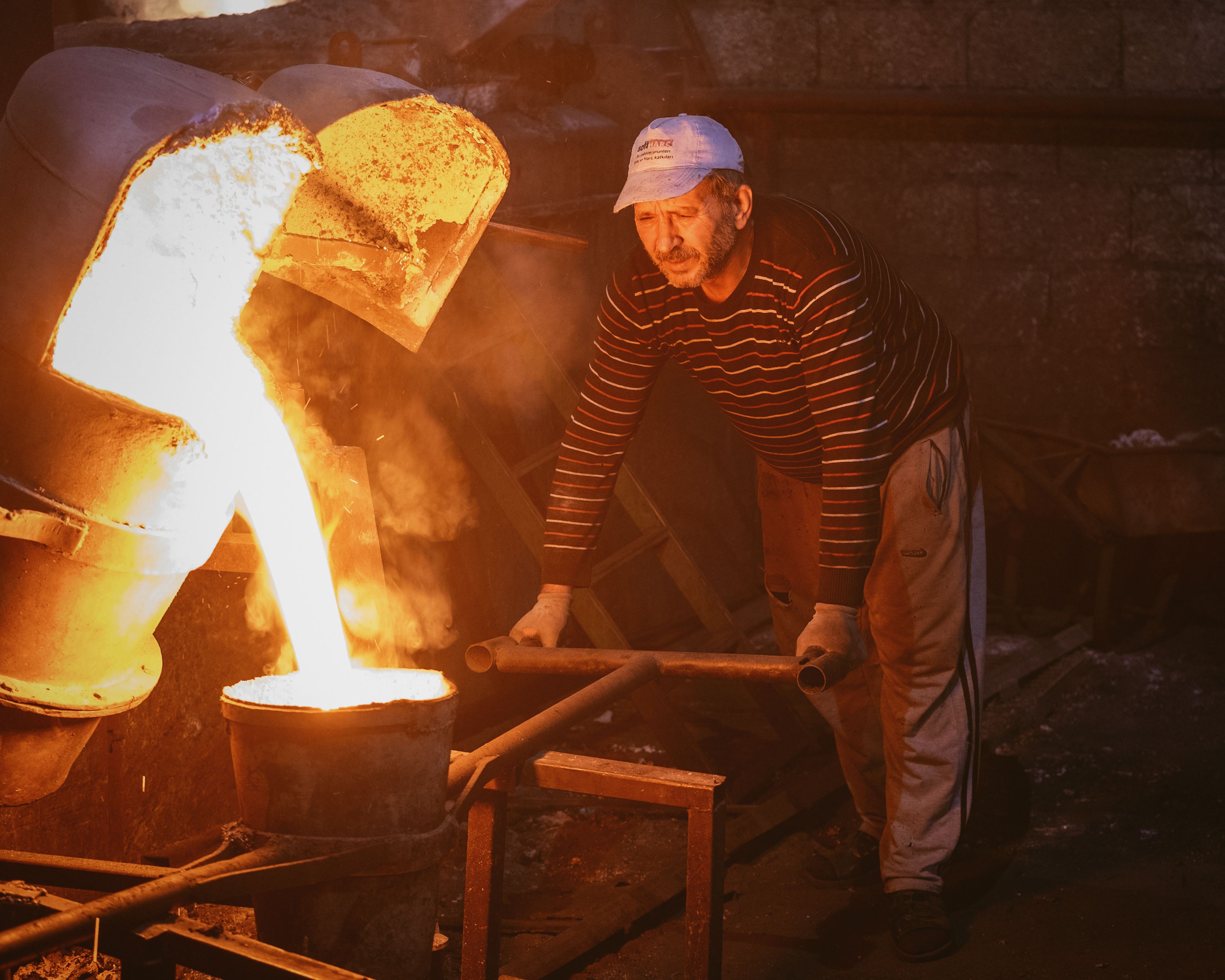
The difference between the two processes begins with how molten aluminum enters the mold, but that distinction affects equipment, production speed, geometry, surface quality, and the economics of the final part.
Aluminum die casting uses external pressure to inject molten metal into the die. This pressure allows the alloy to fill complex cavities quickly and can support thinner walls and detailed features.
Gravity casting relies on the weight of the molten metal itself. The lower filling pressure means the process generally favors designs with thicker sections and more gradual metal-flow paths.
The pressure difference also affects how engineers approach mold design. High-pressure die casting requires careful control of gates, vents, overflow areas, injection speed, and pressure, while gravity casting places greater emphasis on natural filling behavior and feeding during solidification.
High-pressure aluminum die casting requires dedicated die-casting machinery capable of controlling injection force, speed, pressure, mold clamping, and cycle timing.
The dies also need to withstand repeated high-pressure filling cycles, so tooling is typically more complex and represents a larger upfront investment. That investment becomes easier to justify when the expected production quantity is sufficiently high.
Gravity casting equipment is generally less complex because it does not require the same high-pressure injection system. Depending on the part, this can result in lower tooling and equipment requirements, although automation, mold complexity, and production setup still influence total investment.
For buyers, the equipment difference matters primarily because it changes the economics of production. A lower-volume project may not justify the tooling cost of high-pressure die casting, while a high-volume program can benefit from its faster production cycle.
Production speed is a key difference between the two methods.
In aluminum die casting, molten metal is injected rapidly, solidifies inside the mold, and is ejected so that another cycle can begin. Once a stable process is established, relatively short cycle times make the method well suited to repetitive manufacturing.
Gravity casting takes longer because the mold fills more slowly and the metal must solidify under different feeding and cooling conditions. The resulting production cycle is generally longer, which can limit output compared with high-pressure die casting.
This does not make one process universally more efficient. The relevant question is whether the production volume is high enough to justify the faster but more tooling-intensive process.
High-pressure die casting can reproduce relatively fine mold details and produce smooth external surfaces because the molten alloy is forced closely against the die cavity under pressure.
This can be useful for visible housings, electronics components, appliance parts, or products where a consistent external appearance is important. It can also help reduce the amount of secondary machining required for non-critical surfaces.
Gravity-cast parts generally have less fine detail and may require more finishing or machining depending on the application. Surface quality can still be good when metal molds and well-controlled processes are used, so “rough” should not be treated as an inherent characteristic of every gravity-cast part.
The final surface depends on mold material, mold condition, alloy, coating, casting temperature, and subsequent finishing operations.
Aluminum die casting is usually more suitable when the part combines complex geometry, relatively thin walls, high production quantities, and repeatable dimensions. Electronics enclosures, heat sinks, automotive housings, lighting components, and compact machinery parts are common examples.
Gravity casting is often considered for parts with thicker sections, simpler geometry, lower-to-medium production quantities, or mechanical requirements that benefit from different alloy and heat-treatment options.
The application should therefore determine the process, not the other way around. A part designed for gravity casting may need geometry changes before it can take full advantage of high-pressure die casting, and the reverse is also true.
| Feature | Aluminum Die Casting | Gravity Casting |
|---|---|---|
| Pressure | High-pressure injection | Natural gravity filling |
| Equipment | Dedicated high-pressure die-casting machine | Generally simpler casting equipment |
| Production speed | Faster cycle, suited to higher volume | Slower cycle |
| Geometry | Supports thin walls and more complex details | Better suited to simpler, thicker sections |
| Surface finish | Generally smoother and more detailed | Usually less detailed, depending on mold and process |
| Tooling investment | Typically higher | Often lower |
| Typical volume | Medium to high | Low to medium, depending on part |
| Common applications | Electronics housings, automotive parts, heat sinks, complex enclosures | Structural castings, industrial components, thicker housings |
Choosing between aluminum die casting and gravity casting requires balancing part specifications with production costs. Key considerations include:
The final decision should consider manufacturing feasibility and total production costs, including tooling, casting, machining, and finishing.
Aluminum die casting and gravity casting both provide practical routes for manufacturing aluminum components, but they serve different production needs. High-pressure die casting is generally better suited to complex geometry, thinner walls, faster cycles, and medium- to high-volume production, while gravity casting can be appropriate for simpler, thicker parts and lower-volume projects.
At QANYU Industrial, we provide aluminum alloy die-casting services together with mold development, CNC machining, surface treatment, assembly, and inspection. This allows us to review part geometry, production quantity, tolerance, and finishing requirements together before establishing the manufacturing process. QANYU’s current die-casting capabilities cover aluminum, zinc, and magnesium alloy production for applications ranging from electronics components to larger structural parts.
If you are evaluating aluminum die casting for a new OEM project, contact us today to discuss your drawings, production volume, and manufacturing requirements.